HSBC Voice Assistant
Company: HSBC Group
Platform: Alexa
Years: 2019
Role: Principle Experience Designer
Design Team Size: 1 Designer, 1 Project Manager, 2 Experience Strategists, 1 User Researcher
Finding the questions to ask
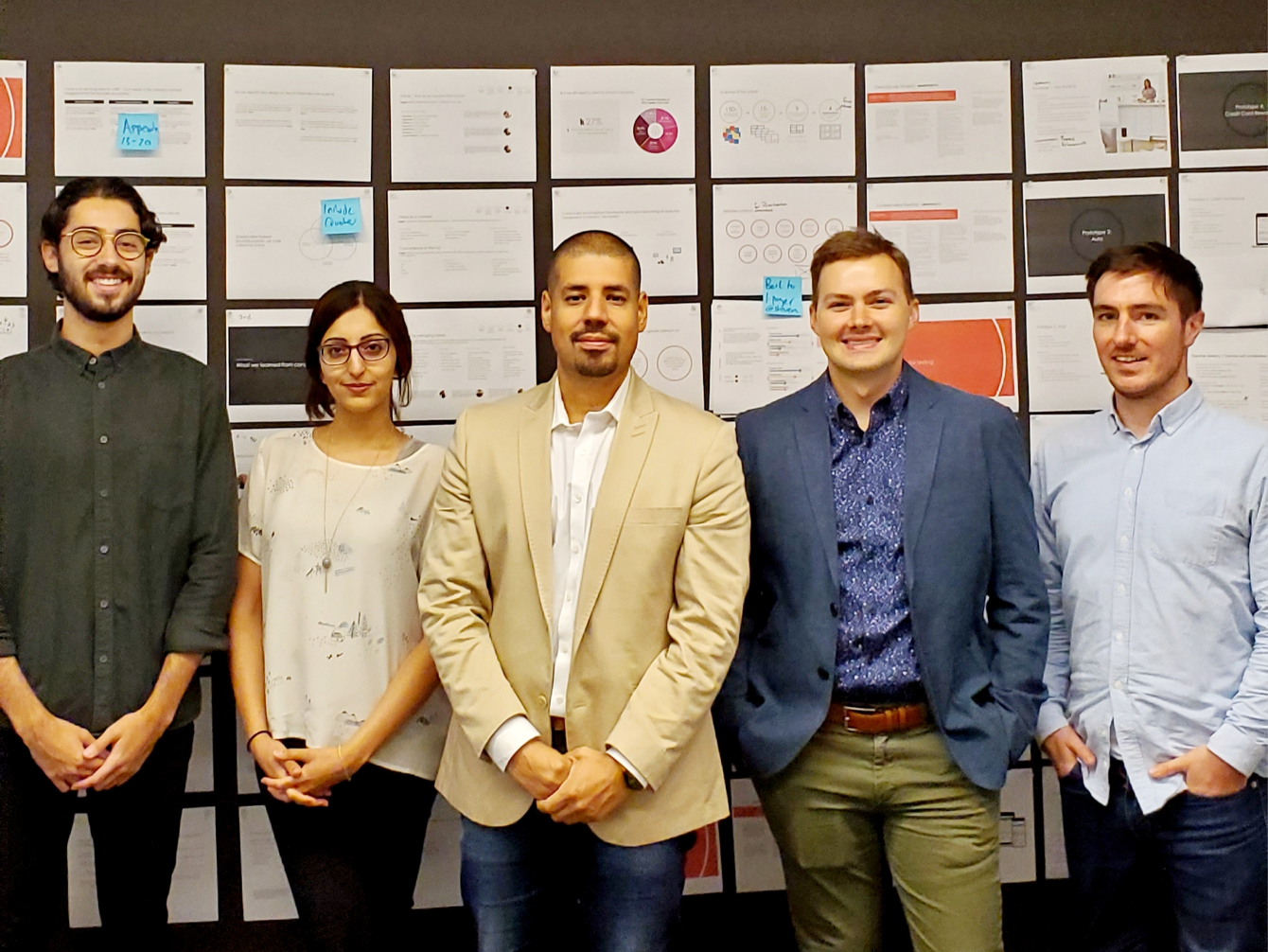
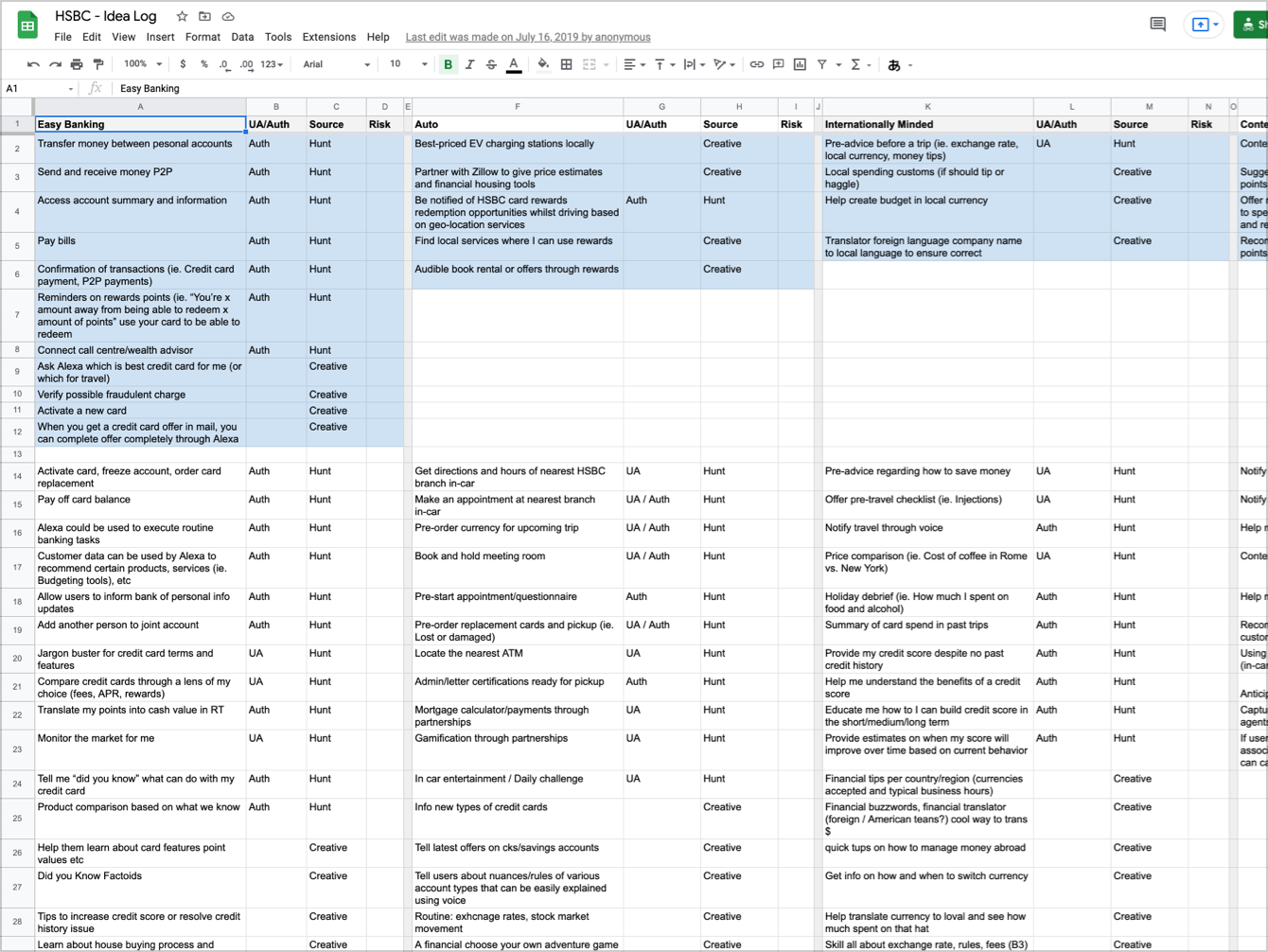
In 2019, I worked on a project with a small team of experience strategists, designers, and researchers setting out to help HSBC understand whether their customers would want to use an Amazon Alexa skill to conduct banking tasks. We started the process by conducting interviews with executives at HSBC. We were also able to integrate with the HSBC digital team in a way that was unique and helpful throughout the process. An executive that worked at HSBC was embedded into the research team and helped to give us valuable context about the goals and capabilities of the HSBC organization. We then conducted interviews with research subjects, talking to them about how they currently use their Alexa devices and how they conduct banking tasks. From those research activities we collected and categorized the areas where we felt HSBC could provide unique value using an Alexa skill.
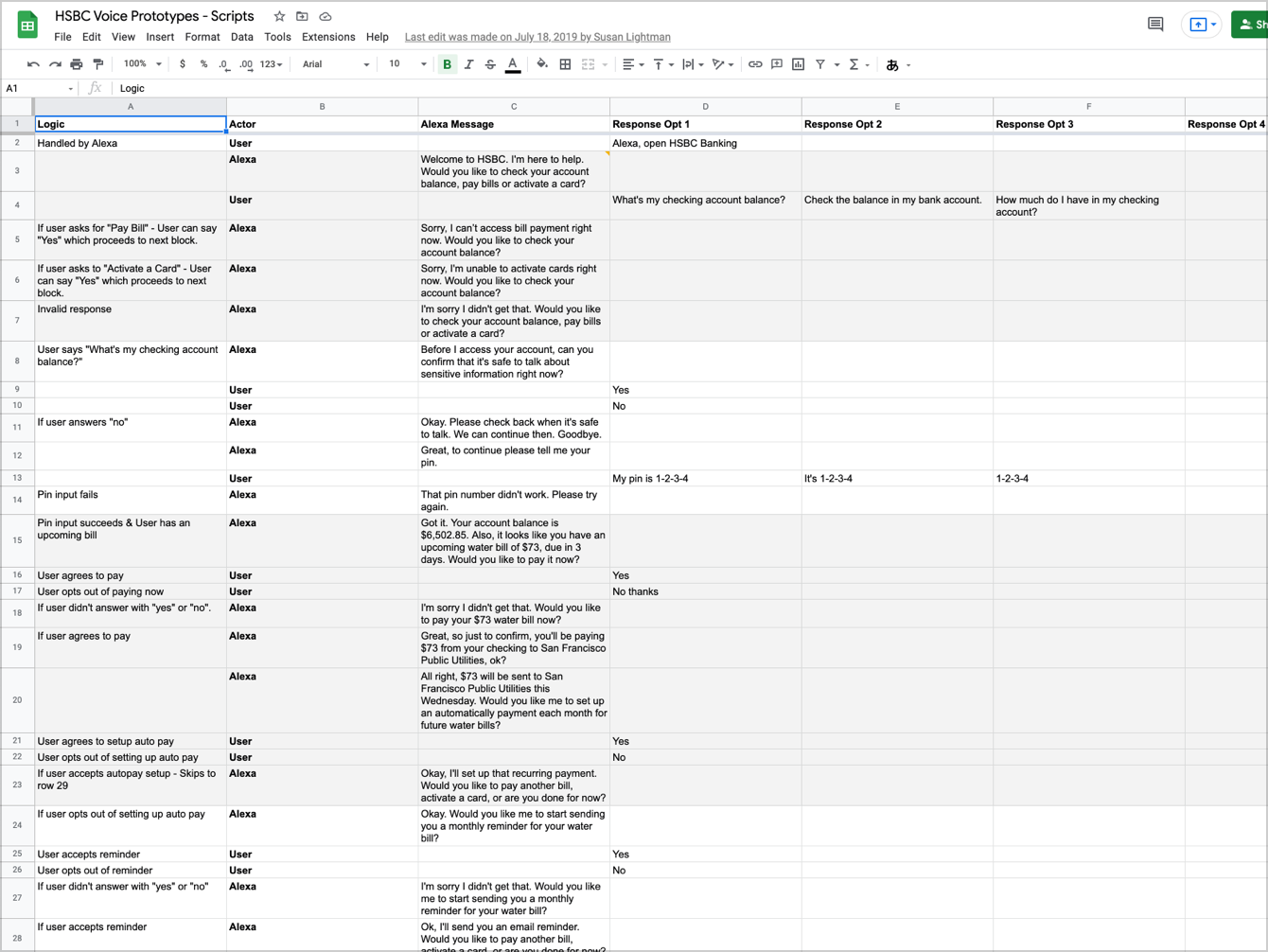
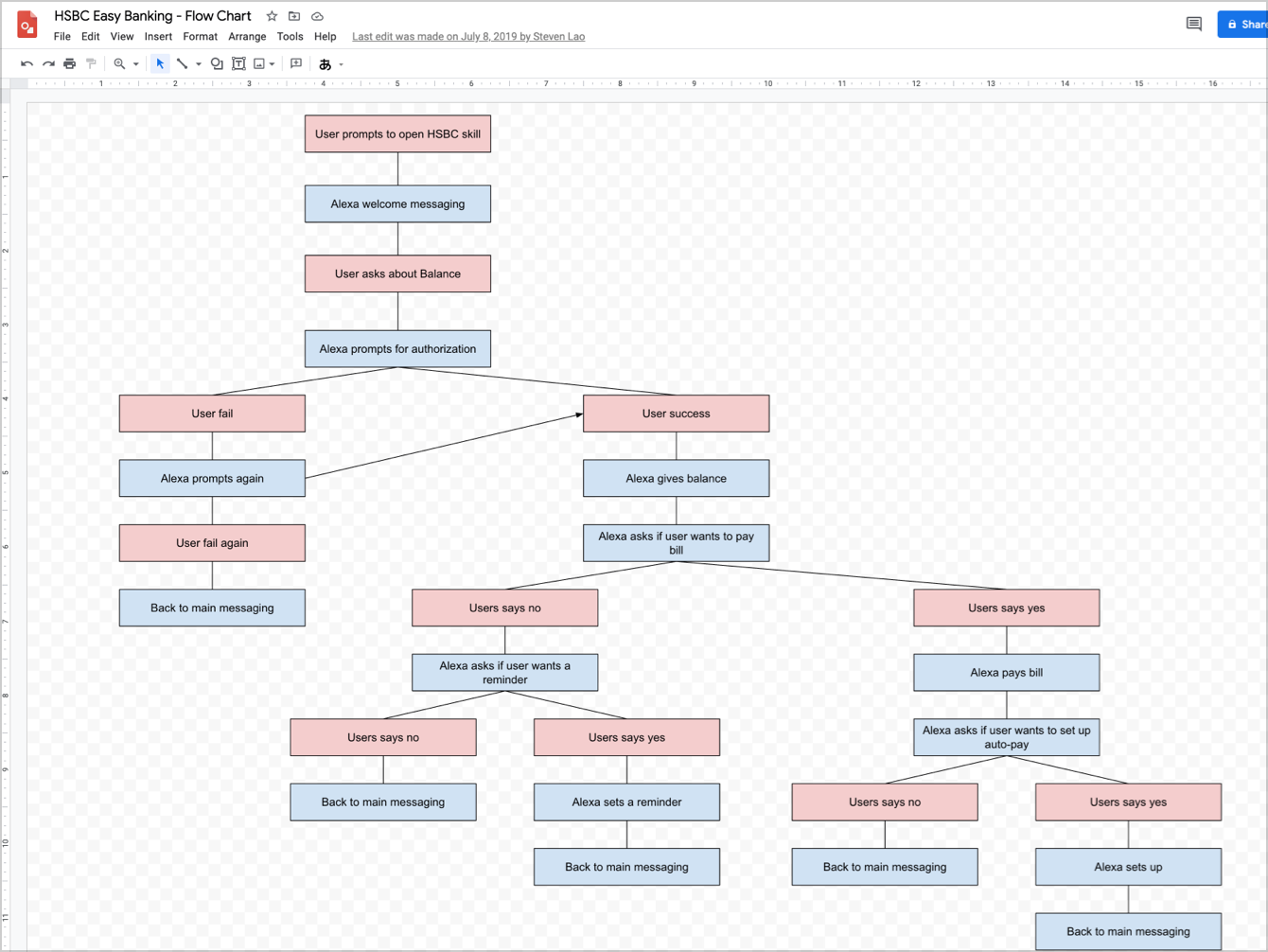
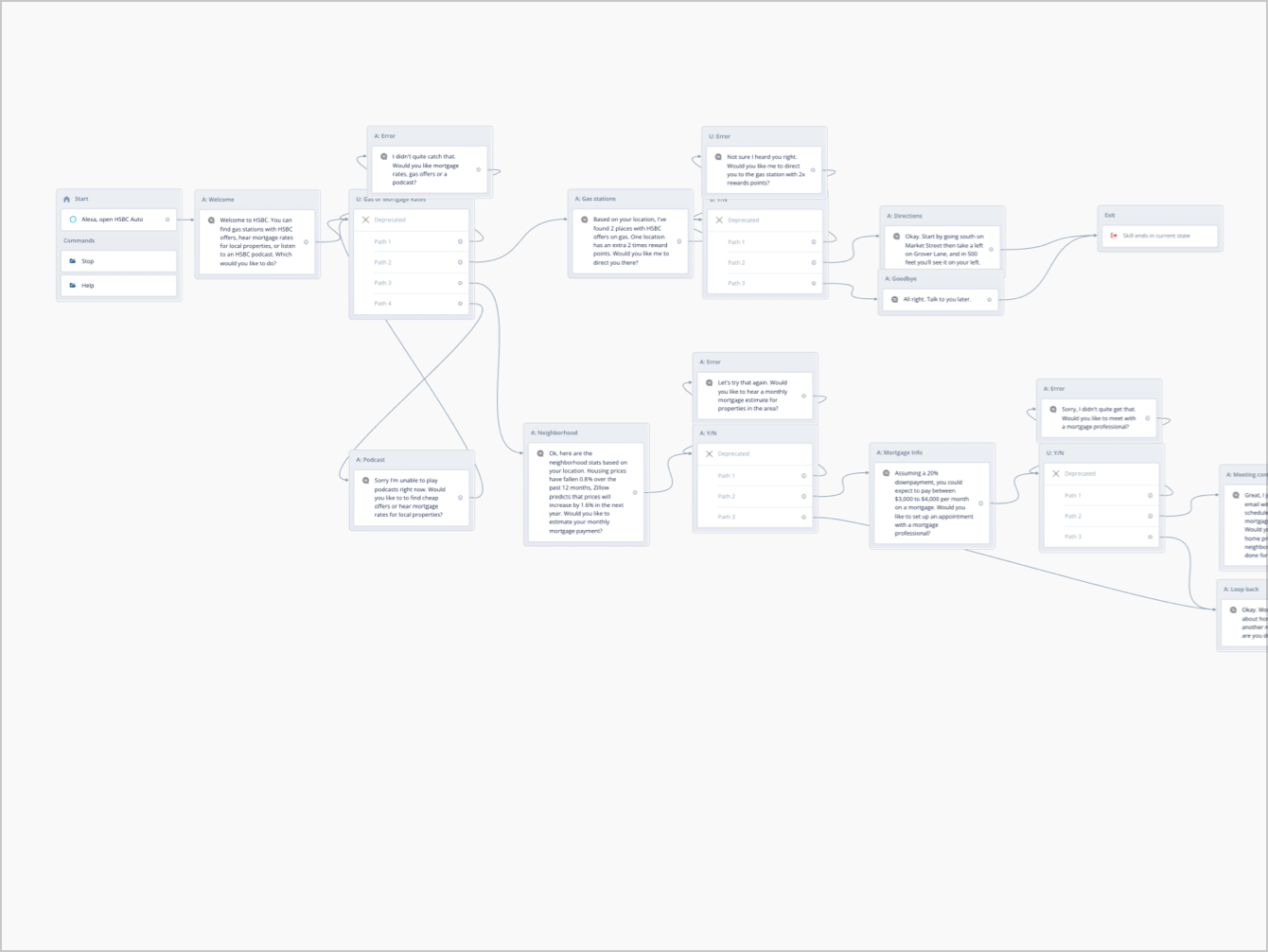
I lead the effort to take the research outputs and develop an experience strategy around how an Alexa skill might come to life. Using a relatively new prototyping tool called VoiceFlow I created a production level Alexa skill and loaded it onto an Amazon Echo device. At my desk, I talked to Alexa throughout the day understanding how the interactions felt and whether they were natural in the way that we would want a voice assistant to speak. We created four different prototypes meant to demonstrate the different areas where we felt HSBC could create value. These covered things like car-based financial tasks, where voice interaction is fairly important, to traditional banking which a user might do in their home.
Through this research process we wanted to uncover how people felt about security in particular. If you’re in the privacy of your own home saying your banking password out loud doesn’t seem like it would be the end of the world. But the customer also needed to trust that their voice was encrypted and that it wouldn’t be something that could be exposed not only to people in their home, but also to Amazon. We came up with different ways for the voice assistant to confirm that the customer was in a place that was secure or private. We also thought about ways that would make sense for the customer to use their phone for some tasks involving security such as quickly using Face ID on their HSBC app to confirm a transaction.
Testing something real
Once the prototypes were ready to use, we conducted usability research in San Francisco and in New York with some of the earlier participants in the study as well as new participants. Through these interviews we were able to find some issues in the prototypes that existed from both a content perspective as well as a usability perspective. For example often times Alexa would speak in a prolonged way that felt unnatural for a computer even though it might seem normal if a person spoke for that long all at once. So we tried to make sure that the voice assistant spoke in an almost abrupt way and completed its responses super quickly. We also found that people generally didn’t have too many issues from a privacy perspective. They were excited about the idea of being able to check the balance of their checking account while cooking or being able to check on the status of a transaction while on the road and using Alexa in their car.
Getting ready for what’s next
Ultimately, HSBC decided to hold off on immediately releasing an Alexa skill. But the findings from the research and prototyping that we conducted were helpful for HSBC to understand how they would go to market, especially in the United States. We presented to the Chief Experience Officer at HSBC and reviewed the findings of the research as well as a live demo of the prototype. He was ecstatic to see HSBC, which is a traditional bank with traditional values, being able to continue to push in an innovative way into new platforms and technologies.